If you are preparing to sell a Moore Park home, staging is not about making it look generic. It is about helping buyers see the scale, light, craftsmanship, and setting that make this neighbourhood so special. When your home is presented with care, the photos work harder, the first showing feels stronger, and buyers can connect with the space more quickly. Let’s dive in.
Why staging matters in Moore Park
Moore Park sits within Toronto’s Rosedale-Moore Park neighbourhood profile, where housing is dominated by low-rise homes. City data shows a mix led by single-detached houses, followed by semi-detached homes and other low-rise formats, with a high share of owner households. In a market shaped by established homes and long-term ownership, presentation tends to matter because buyers are often comparing character, condition, and how move-in ready a property feels.
That matters even more in today’s marketing environment because the sale often starts online. In the 2025 Profile of Home Staging, 73% of buyers’ agents said photos were more important to clients than virtual staging, and 57% pointed to traditional physical staging. The same report found that 31% said staging made buyers more willing to walk through a home they first saw online.
Staging also supports both value perception and pace. According to that same report, 29% of buyers’ agents said staging led to a 1% to 10% increase in the dollar value offered, while 49% of sellers’ agents said staging reduced time on market. In a premium Toronto neighbourhood where buyers usually have clear expectations, that is not a small advantage.
Moore Park homes need a tailored approach
Moore Park has a distinct built form and history. City records describe it as an area largely developed between 1900 and the 1930s, with homes in styles such as Dutch Colonial Revival, English Cottage, Georgian, and Tudor. Many lots also connect to mature landscape features, including ravine edges, which adds to the neighbourhood’s visual appeal.
That means the goal is not to strip away personality. The better strategy is to reveal original character in a clean, current, low-distraction way so buyers notice the things that matter most, like proportions, trim, fireplaces, stair details, window placement, and natural light. A well-staged Moore Park home should feel refined and easy to read.
For many sellers, this is where design judgment makes a real difference. Oversized furniture, heavy styling, or trend-driven decor can compete with period architecture instead of supporting it. A restrained palette and properly scaled pieces usually do a better job of letting the home speak for itself.
Start with the rooms buyers notice most
Not every room carries the same weight in a sale. The 2025 Profile of Home Staging found that buyers care most about the living room, primary bedroom, and kitchen. Sellers’ agents also reported staging those spaces most often, along with the dining room.
If you are deciding where to focus time and budget, start there. In a Moore Park home, those rooms often carry much of the emotional impact because they show how the house lives day to day while also highlighting architectural detail. When those spaces feel calm, bright, and functional, the whole home tends to feel more compelling.
Living room first impressions
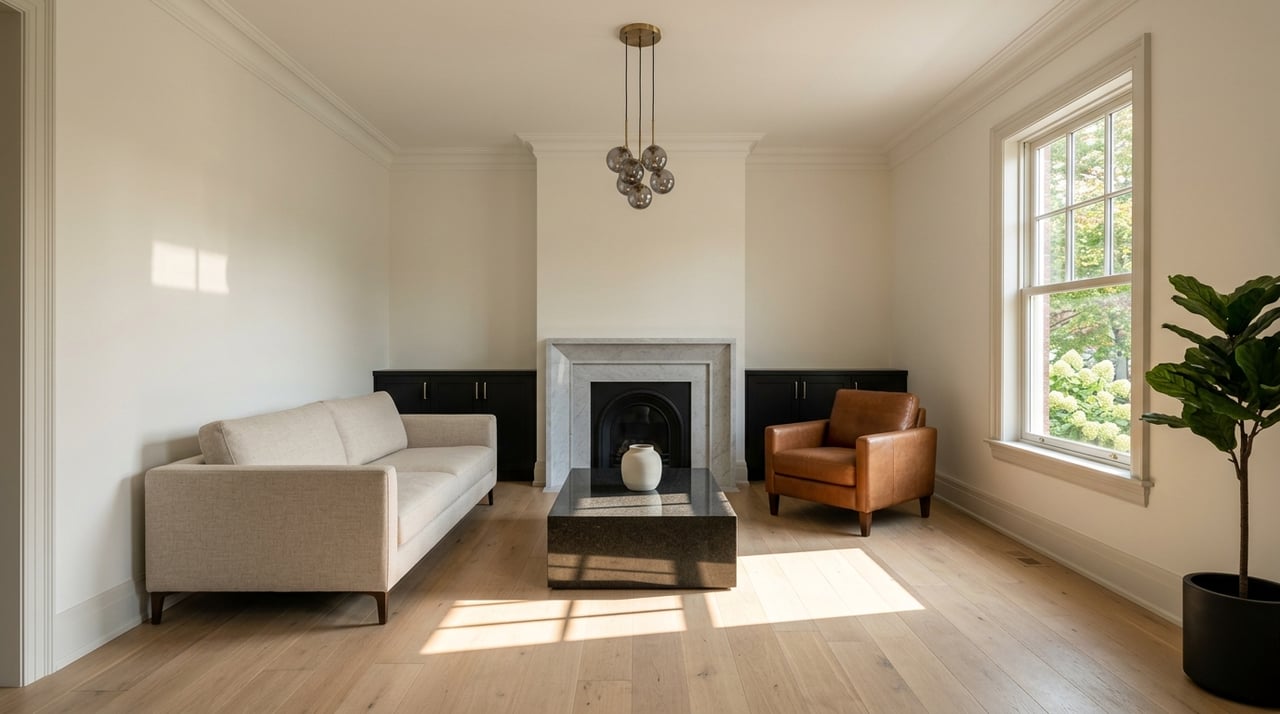
The living room was rated very important by 37% of buyers’ agents in the staging report. This is often where buyers first test whether the home feels elegant, comfortable, and proportionate. In a classic house, the living room may also showcase fireplace surrounds, millwork, ceiling height, and window symmetry.
Keep furniture scaled to the room and avoid blocking focal points. If there is a fireplace, frame it rather than crowd it. If there are original windows or trim details, give them visual breathing room.
Primary bedroom calm
The primary bedroom was rated very important by 34% of buyers’ agents. Buyers tend to respond best when this room feels restful, spacious, and uncluttered. In older homes, thoughtful layout matters because room shapes can be different from newer builds.
Use simple bedding, clear surfaces, and minimal accent decor. Remove extra seating or storage pieces if they make the room feel tight. The goal is to create a sense of ease, not to fill every corner.
Kitchen clarity
The kitchen was rated very important by 23% of buyers’ agents. Whether your kitchen is recently updated or more traditional, buyers want to understand the workspace, storage, and flow. They should not have to look past countertop clutter, bulky accessories, or crowded open shelving.
Clear counters as much as possible and keep styling minimal. A kitchen in a character home can still feel current when it looks bright, organized, and intentional. Even small visual edits can make the room photograph better and feel more usable in person.
Edit the house before you stage it
Good staging starts with subtraction. CREA’s seller guidance recommends purging clutter, boxing up personal items and trinkets, cleaning surfaces, and refreshing bedrooms so buyers can picture the home as their own. It also warns against simply moving clutter into closets, since buyers will open them.
This step matters in Moore Park because many homes have layered histories, accumulated furnishings, and rooms with multiple uses. Even beautiful pieces can become noise if there are too many of them. A buyer should be able to understand each room in seconds.
A simple pre-staging checklist can help:
- Remove family photos and highly personal items
- Pack away small decor collections
- Clear most countertop items
- Edit bookshelves and display surfaces
- Thin out furniture to improve flow
- Organize closets, mudrooms, and storage areas
- Deep clean floors, windows, trim, and bathrooms
Let the architecture lead
Toronto’s Official Plan says established neighbourhoods should respect and reinforce existing physical character, including building types, landscaped open space, and heritage elements. While that policy guides development, it also offers a useful lens for staging. In Moore Park, buyers are often responding to the home’s relationship to its site, its period details, and its place within a mature streetscape.
That is why staging should support the architecture instead of competing with it. If your home has leaded glass, wood trim, arched openings, or a gracious staircase, make sure those features are visible. If the rear garden or ravine-facing setting is part of the appeal, arrange rooms to draw the eye toward those views.
Scale matters
Large furniture can make a room feel smaller and hide original details. In a classic home, this can also distort how buyers read circulation and proportions. Choosing fewer, better-scaled pieces often makes the house feel more generous.
Color matters too
A restrained palette usually works best in this setting. Soft neutrals and natural textures can make older homes feel fresh without flattening their character. Strong color can still be used in small accents, but it should not pull attention away from the home itself.
Do not forget curb appeal
Exterior presentation matters just as much as the inside. CREA advises sellers to keep lawns and gardens clean and manicured, pay attention to the driveway, walkway, and porch, and improve the front door with fresh paint or updated hardware if needed. Those basics shape the first impression before a buyer ever steps inside.
In Moore Park, that first impression carries extra weight because mature trees, formal landscaping, and established frontage are often part of the property story. Buyers are not only assessing the house. They are also responding to how the home sits on the lot and how the approach feels.
Focus on the full arrival sequence:
- Tidy front garden beds and remove debris
- Prune plantings that block key sightlines
- Sweep the walkway and porch
- Clean the driveway and front steps
- Refresh the front door if it looks tired
- Add simple seasonal planters only if they suit the home
Check heritage status before exterior changes
Before doing more than simple styling outside, check the property’s heritage status. The City of Toronto states that owners of properties designated under the Ontario Heritage Act need a heritage permit before making changes. The City also provides tools to confirm whether a property is designated or listed on the Heritage Register.
That is especially relevant in Moore Park, where some century homes are already protected and others may still be under evaluation for possible inclusion. If you are considering exterior paint changes, hardware changes, lighting replacements, or other visible updates beyond basic staging prep, it is smart to confirm what approvals may be required first.
Use virtual staging carefully
If the home is vacant, virtual staging can be a useful supplement. CREA notes that virtual staging can help buyers imagine possibilities, but digitally rendered images should be disclosed clearly and should not be used to add or hide permanent features.
That makes virtual staging a support tool, not a shortcut. In a Moore Park listing, it can help buyers understand scale and layout in empty rooms, but it should still reflect the home honestly. Clear, accurate presentation builds trust and helps avoid disappointment at showings.
Staging is part of the marketing strategy
Staging works best when you treat it as part of the full listing strategy, not as an isolated design task. The strongest results usually come when presentation, photography, timing, and pricing all support the same story. That matters in the current GTA market, where TRREB reported 6,583 home sales in May 2026, up 6.3% year over year, while the average selling price across the GTA was down 4.6% year over year to $1,069,700.
TRREB also reported that detached homes in Toronto’s 416 area averaged $1,610,988 in May 2026. For a Moore Park seller, that context suggests buyers are active, but they also have options. A polished, design-led presentation can help your home feel worth closer attention from the start.
When your home has strong bones, staging should make those strengths obvious. It should help buyers feel the architecture, understand the layout, and remember the property after they leave. In a neighbourhood like Moore Park, that kind of clarity can be one of your biggest advantages.
If you are planning a sale and want a staging strategy that respects the character of your home while positioning it for today’s market, Selin Yasar offers a design-led, tailored approach grounded in both presentation and market timing.
FAQs
What matters most when staging a Moore Park home?
- Focus on revealing character, improving flow, and reducing distractions so buyers can notice the home’s proportions, light, architectural details, and landscape setting.
Which rooms should you stage first in a Moore Park house?
- Prioritize the living room, primary bedroom, kitchen, and dining room, since staging research shows buyers and agents place the most importance on those spaces.
Should you stage the exterior of a Moore Park property too?
- Yes. The front garden, walkway, porch, driveway, and front door all shape first impressions and should be clean, tidy, and in keeping with the home’s style.
Can you use virtual staging for a vacant Moore Park listing?
- Yes, if it is clearly disclosed and does not add or hide permanent features. It should help buyers understand the space, not misrepresent it.
Do you need to check heritage rules before updating a Moore Park exterior?
- Yes. If the property is designated under the Ontario Heritage Act, the City of Toronto says a heritage permit is required before undertaking changes, so it is wise to confirm status before exterior updates.