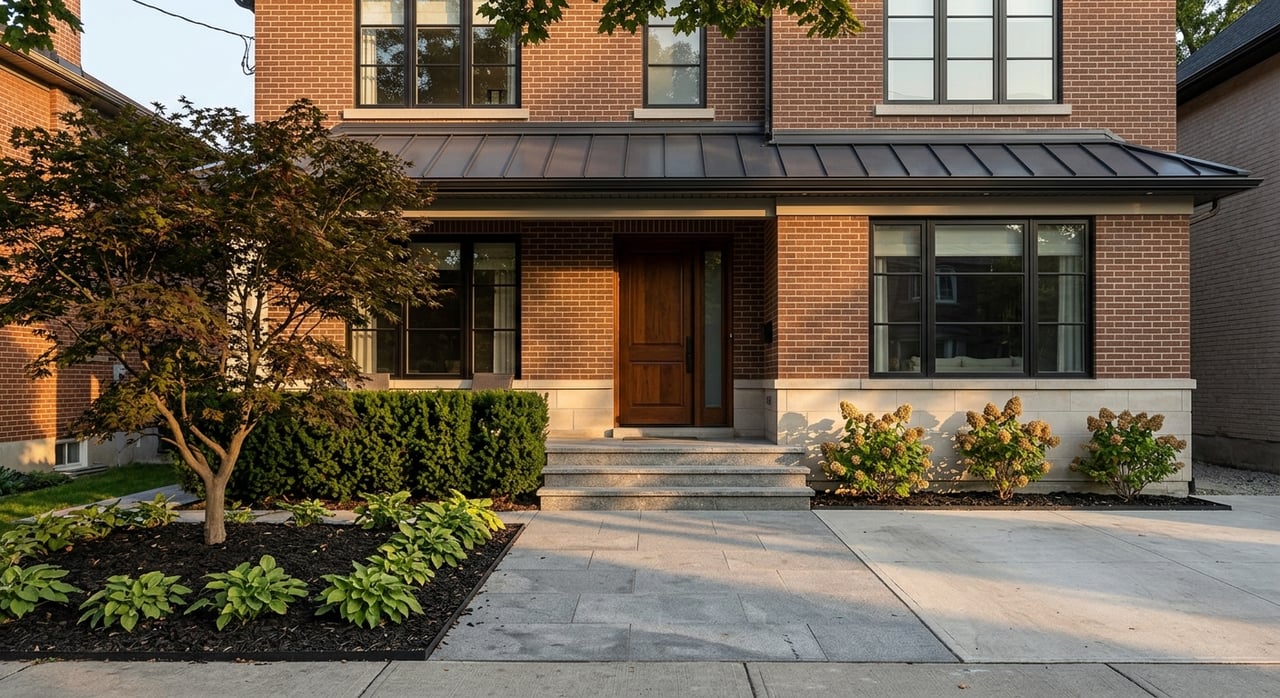
If you are planning to move from your current home into a detached property in Forest Hill, you are likely balancing a big emotional goal with an even bigger financial decision. This is not a market where asking price tells the full story, and it is not a move you want to sequence casually. With the right plan, you can understand your budget, protect your timing, and shop with more confidence. Let’s dive in.
Why Forest Hill Requires a Strategy
Forest Hill sits in a premium price band even by Toronto standards. In May 2026, the detached benchmark price for the City of Toronto was $1,610,988, while the TRREB C03 and C04 districts that include Forest Hill South and Forest Hill North were much higher at $2,106,821 and $2,753,402.
That gap matters if you are upsizing. It means your next purchase may involve a much larger down payment, higher transfer taxes, and a narrower margin for error on timing. It also means you need to judge value carefully instead of reacting to list prices alone.
Start With Your Real Budget
Before you tour homes, get clear on what you can comfortably buy and what the move will actually cost. A mortgage preapproval can help estimate the maximum mortgage you may qualify for, and it may lock in an interest rate for 60 to 130 days, but it does not guarantee final approval.
In Forest Hill, many detached purchases exceed $1.5 million. At that price level, CMHC mortgage loan insurance is not available, and a minimum 20 per cent down payment is required. For many buyers here, conventional financing is the practical starting point.
Build a Fully Loaded Budget
Your purchase price is only one part of the picture. In Toronto, you also need to budget for both Ontario land transfer tax and Toronto municipal land transfer tax, which become especially significant above $2 million.
Your ownership costs should also include:
- Property taxes
- Home insurance
- Utilities
- Heating and cooling
- Home repairs and maintenance
- Yard and driveway maintenance
- Legal fees and closing costs
If you are also selling a home, add sale-related costs too. These may include legal fees, mortgage discharge fees, possible mortgage prepayment penalties, repairs, cleaning, staging, moving costs, inspection costs, and appraisal costs.
Understand Forest Hill Inventory
One of the biggest challenges in Forest Hill is that inventory can be thin and pricing can look uneven. That is why broad averages do not always tell the whole story.
Forest Hill South’s 2025 community data showed active listings rising from 44 in Q1 to 75 in Q2, then 72 in Q3 and 61 in Q4. Average prices ranged from $2.20 million to $3.25 million, while median prices ranged from $1.48 million to $2.70 million.
That spread between average and median is important. It suggests a few very high-end sales can pull averages upward, so medians and sold comparables are often more useful than one headline number.
Forest Hill North showed a similar pattern, but with even smaller transaction counts. In 2025, active listings ranged from 8 to 20, and sales ranged from 9 to 16, which means one or two notable sales can have an outsized effect on the data.
What This Means for You
Forest Hill is not a market where every home sells instantly in a bidding war. It is also not a market where buyers can assume deep discounts.
In Q4 2025, Forest Hill South’s all-home average sale-to-list ratio fell to 89 per cent and average days on market stretched to 61. By May 2026, the detached benchmark figures in C03 were back near a 97 per cent sale-to-list ratio with 17 average days on market, and C04 posted a 96 per cent ratio with 17 days on market.
The practical takeaway is simple: pricing discipline matters. Well-positioned homes can move quickly, while ambitious pricing may cause a listing to sit and soften.
Sell First or Buy First?
For most upsizers, the move comes down to three variables: sale proceeds, purchase price, and timing. Your strategy should be built around how much certainty you need on each one.
A sale-first plan gives you the clearest view of your net proceeds before you commit to the next purchase. That can reduce pressure and help you shop within a budget that reflects real numbers, not estimates.
A buy-first plan can work too, but it usually requires more flexibility. You may be carrying two transactions at once, and that increases the importance of timing, financing, and closing-date coordination.
When Sale-First Makes Sense
A sale-first approach may be worth considering if you want more control over your budget. It can be especially helpful when you are stretching into a premium detached market where price swings and carrying costs can be meaningful.
Benefits of a sale-first sequence include:
- A clearer understanding of your available equity
- Less risk of overcommitting on the purchase side
- More confidence when making an offer
- Easier planning around closing funds and taxes
When Buy-First May Appeal
A buy-first approach can feel more comfortable if you want to secure the next home before letting go of the current one. In a thin-inventory market, that emotional appeal is understandable.
Still, this path calls for a realistic plan. You will need to account for possible overlap in carrying costs, closing timelines, and the chance that your current home may not sell on the exact schedule you hoped for.
Use Conditions and Dates Wisely
Accepted offers typically include a closing date and specific time limits. Offers can also be conditional on things like mortgage approval or a home inspection.
For an upsizer, those details are not just paperwork. They are part of your risk management strategy.
A thoughtful closing date can help align your sale and purchase. A financing condition can give you time to confirm final mortgage details. An inspection condition can help you better understand the home before the deal becomes firm.
How to Judge a Forest Hill Listing
In a neighborhood with small sample sizes and premium pricing, you need a more disciplined lens. The best question is not, “Is this asking price fair?” The better question is, “How does this home compare to recent sold properties, current competition, and local timing trends?”
That means looking at:
- Recent sold comparables
- Median values where available
- Days on market
- Sale-to-list ratios
- The property’s overall positioning versus similar homes
This is where a curated, analytical approach can help. A detached home in Forest Hill is rarely a one-line spreadsheet decision, but it should still be grounded in evidence.
A Smarter Forest Hill Upsizing Process
If you want a clean framework, keep it simple. The goal is to reduce surprises while staying ready to act when the right home appears.
Step 1: Get Preapproved Early
Start by confirming what a lender may approve and how long your rate hold may last. This gives you a working range, but remember that final approval is still separate.
Step 2: Estimate Net Sale Proceeds
Look beyond your expected sale price. Subtract selling costs, possible mortgage-related fees, and moving expenses so you know what funds may be available for the next purchase.
Step 3: Set a Full Purchase Budget
Include down payment, both land transfer taxes, legal fees, and ongoing ownership costs. In Forest Hill, transfer tax alone can be a major line item, so it should be planned for upfront.
Step 4: Choose Your Sequence
Decide whether you prefer the certainty of selling first or the flexibility of buying first. Your comfort with risk, budget stretch, and timing should shape that decision.
Step 5: Evaluate Homes With Data
Focus on sold comparables, medians, sale-to-list ratios, and days on market. In a market like Forest Hill, that gives you a stronger foundation than asking price alone.
Why This Market Rewards Discipline
Forest Hill detached buyers are often making one of the largest purchases of their lives. In a premium market with thin inventory, even small timing mistakes can become expensive.
That is why the best upsizing strategy is usually not about moving fastest. It is about moving with clarity. When you understand your true budget, sequence the sale and purchase carefully, and evaluate listings with discipline, you put yourself in a much stronger position.
If you are planning an upsizing move in Forest Hill, a tailored, data-led plan can make the process feel far more manageable. For a polished and analytical approach to your next move, connect with Selin Yasar.
FAQs
What makes the Forest Hill detached market different from the broader Toronto market?
- Forest Hill detached homes sit well above Toronto’s citywide detached benchmark, and local inventory can be thin, which makes pricing and timing especially important.
What down payment do you need for a detached home in Forest Hill?
- Many detached homes in Forest Hill trade above $1.5 million, where CMHC mortgage insurance is not available and a minimum 20 per cent down payment is required.
What costs should Forest Hill upsizers budget for besides the purchase price?
- You should plan for Ontario and Toronto land transfer taxes, legal fees, property taxes, insurance, utilities, maintenance, and any selling costs tied to your current home.
Should you sell before buying a detached home in Forest Hill?
- Selling first can give you a clearer picture of your net proceeds and reduce budget risk, while buying first may offer more flexibility but can create more timing and carrying-cost pressure.
How should you evaluate a detached home listing in Forest Hill?
- Look at sold comparables, median values when available, days on market, and sale-to-list ratios instead of relying on the asking price alone.